The case
The chance to architect and build a full tournament management system for Esportligaen was a dream come true for a gamer and full-stack developer like me. Back in 2022, my former company won the contract to create their integrated platform, designed to connect with third-party APIs for a seamless competitive gaming experience. This was a prime opportunity for esports software development. However, we immediately faced a common challenge: a constrained budget. This forced us to make strategic trade-offs between ideal features and practical delivery, a crucial skill in custom web application development.
The Bad Parts
The core of our initial planning was the technology stack selection. I strongly advocated for NextJS, a modern React framework, to build Esportligaen. My vision was a lightweight, high-performance application built for scalability to handle massive traffic spikes during live tournaments. A server-side rendered (SSR) React application would have offered superior website speed and user experience. However, with budget as the deciding factor, the leadership decision was to use WordPress as a headless CMS. This was a key lesson in balancing technical SEO best practices with client constraints and resource allocation.
My Part
On this project, I operated as a de facto technical lead, managing client communication and owning the development of the platform's most critical components. My key contributions centered around backend development and system architecture:
- Designing the platform's overall software architecture.
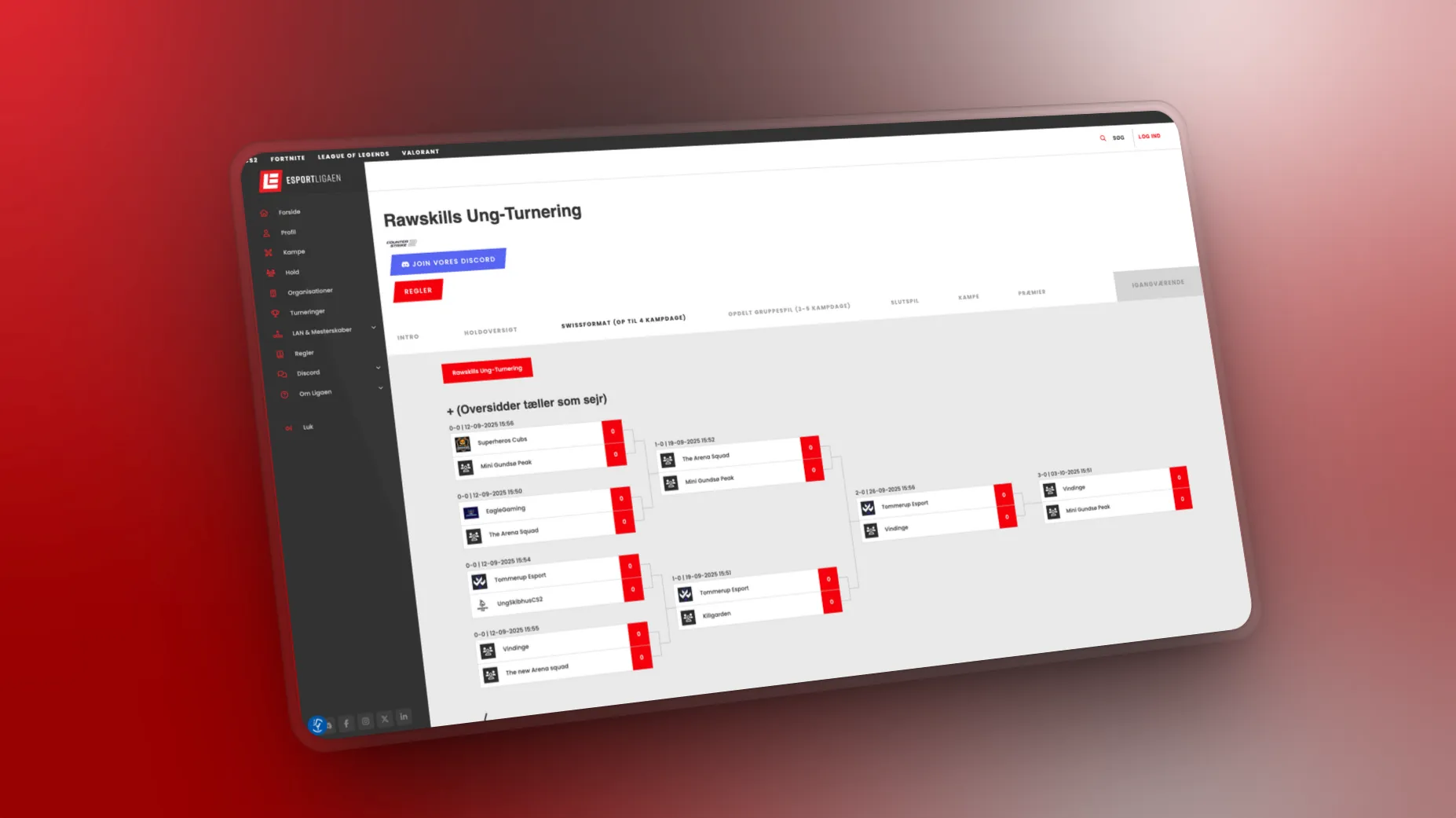
- Building a custom Match Engine that integrated with third-party game server providers via webhooks.
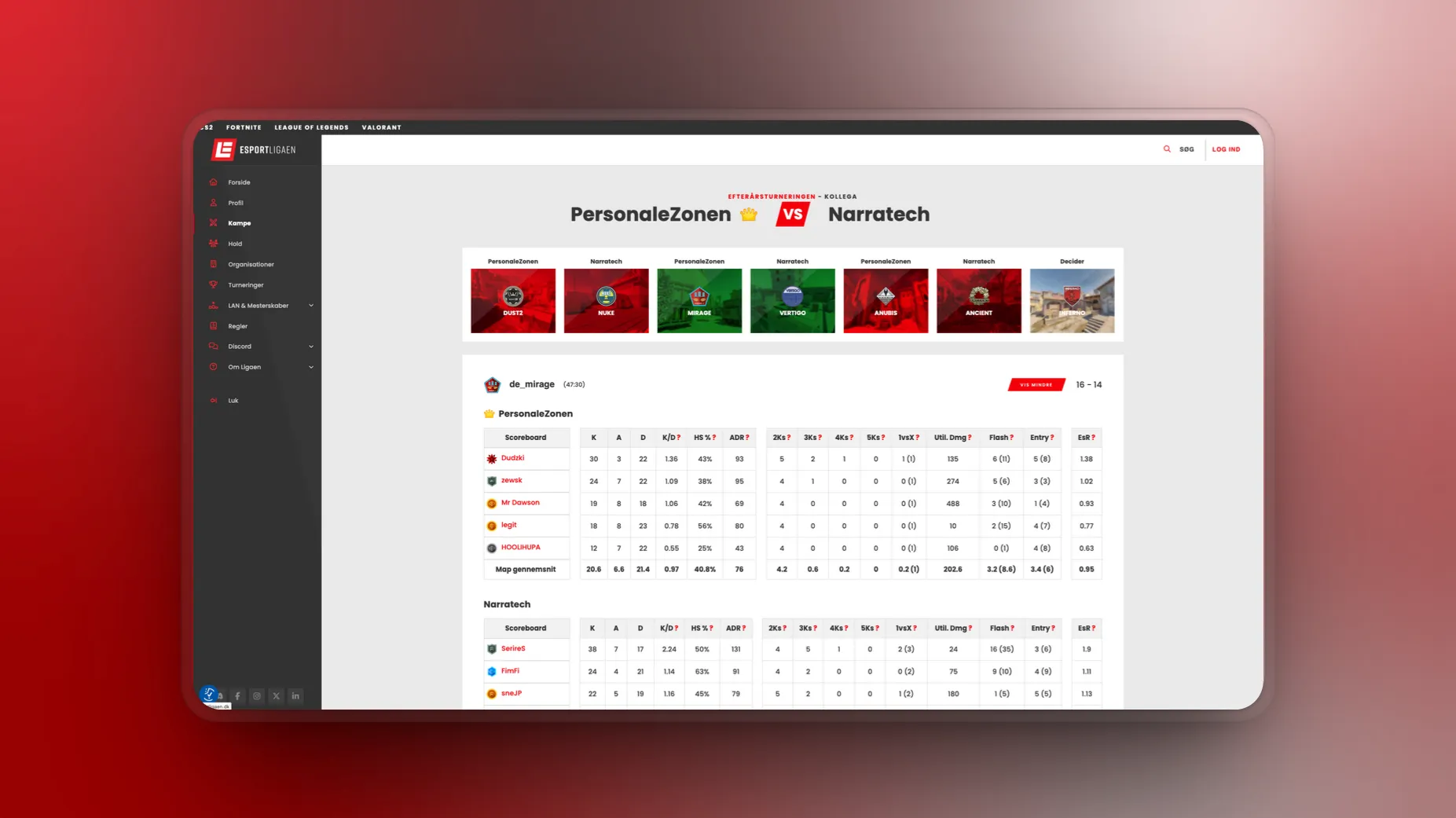
- Developing a real-time Stats Engine to process and display player performance analytics.
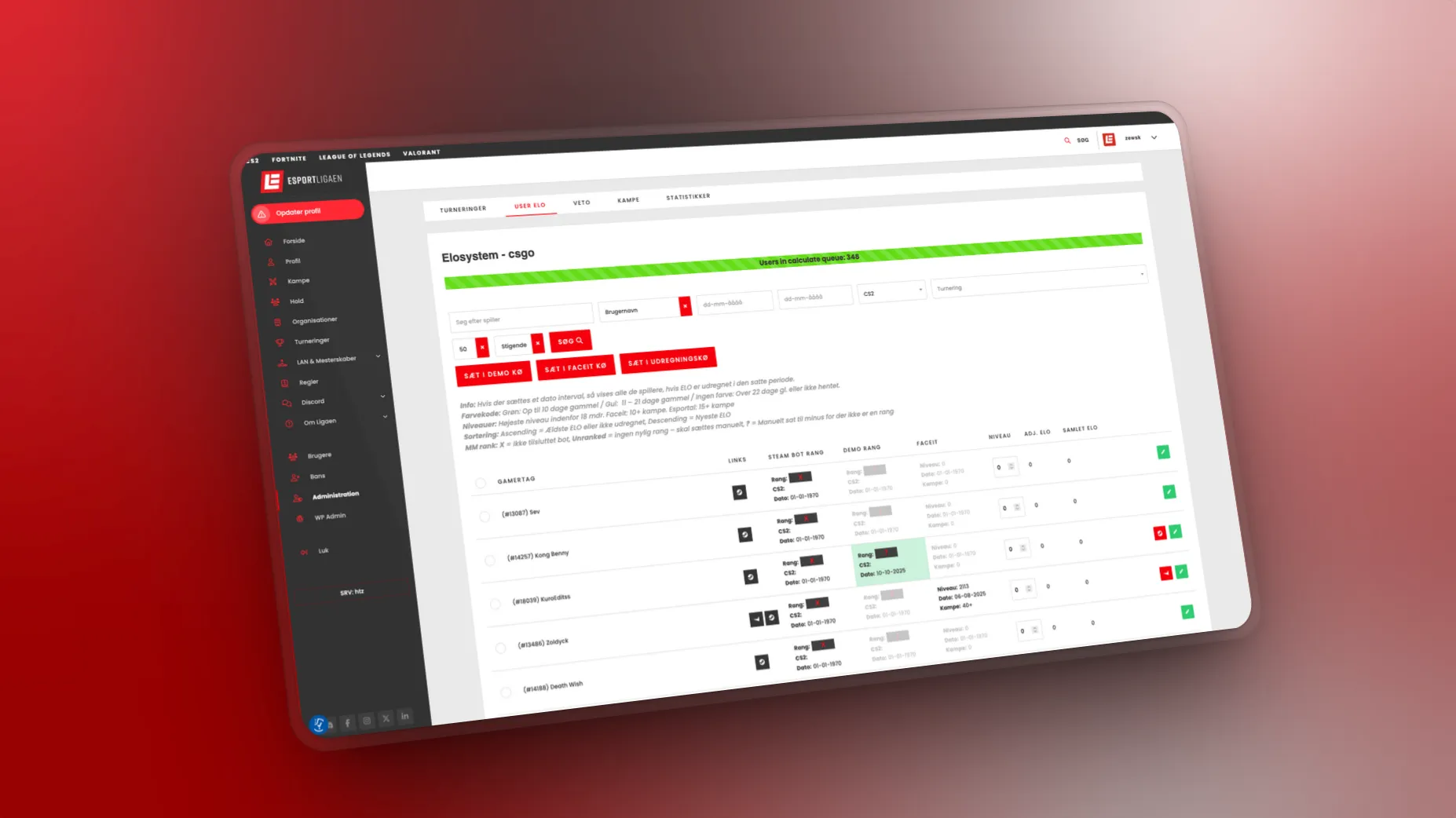
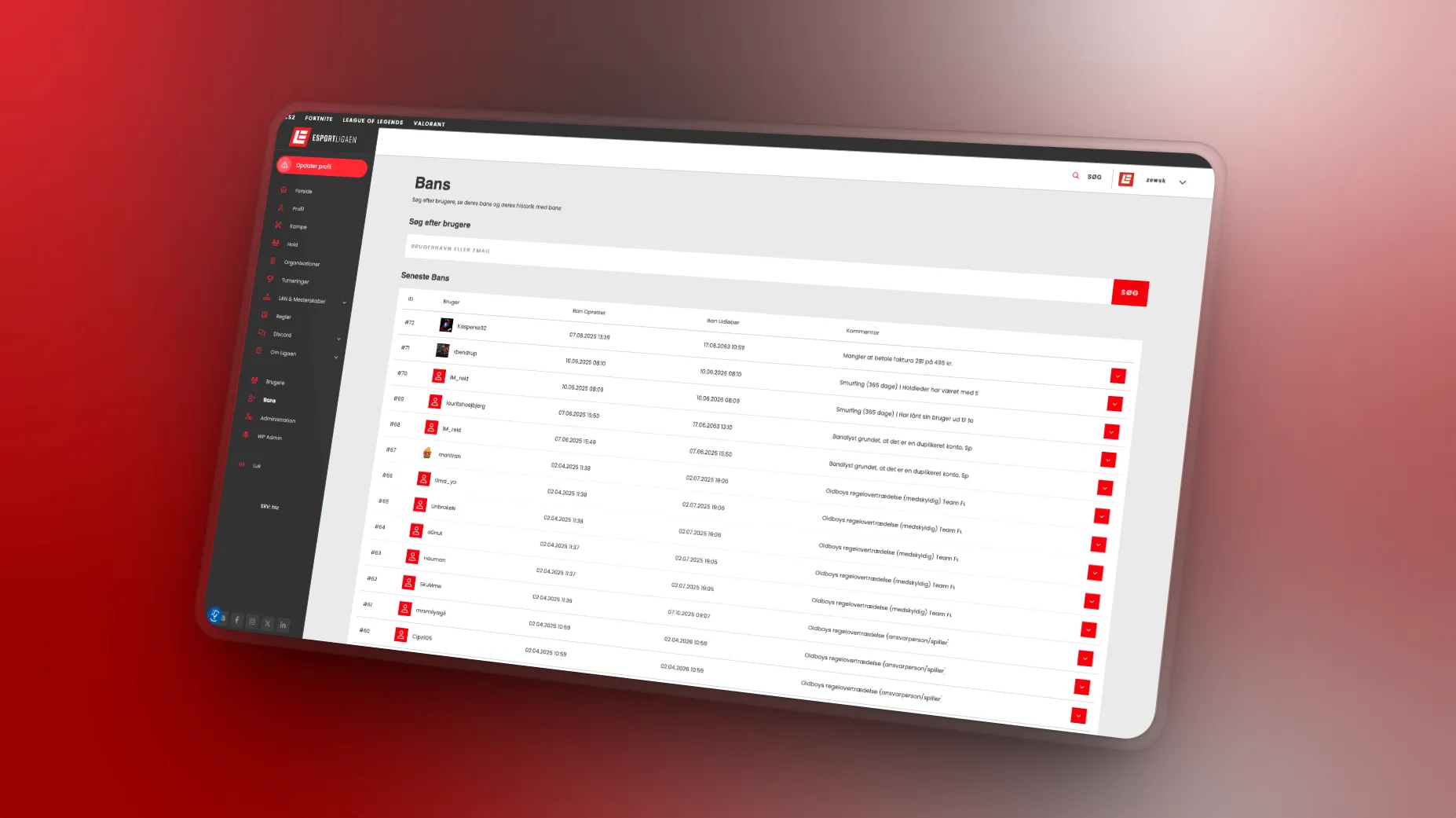
- Creating a comprehensive admin panel for full match and tournament lifecycle management.
Working with two other developers, I ensured our modules connected seamlessly. Under a tight deadline, we had to forgo real-time functionality via WebSockets for a more budget-friendly polling strategy. Despite this, the RESTful API I built successfully handles match automation, data synchronization, and provides a stable foundation for competitive play.
- Designing the platform's overall software architecture.
- Building a custom Match Engine that integrated with third-party game server providers via webhooks.
- Developing a real-time Stats Engine to process and display player performance analytics.
- Creating a comprehensive admin panel for full match and tournament lifecycle management.
Working with two other developers, I ensured our modules connected seamlessly. Under a tight deadline, we had to forgo real-time functionality via WebSockets for a more budget-friendly polling strategy. Despite this, the RESTful API I built successfully handles match automation, data synchronization, and provides a stable foundation for competitive play.
The Platform Today
With the hands-on experience of building a live platform, my approach today is more refined. Now, in a role with greater influence over technical strategy and project management, I have a clear blueprint for a superior esports technology solution.
If I were to rebuild Esportligaen today, I would employ a decoupled architecture using Nuxt.js for the frontend and Laravel for a robust backend API. This modern structure is ideal for scalability, security, and performance, ensuring a fast and reliable experience for thousands of concurrent users. I would mandate WebSockets for true live updates in matchrooms and vetos, creating an immersive, dynamic experience that keeps players and fans engaged. While the initial design followed a corporate guideline, leading a recent website redesign and frontend overhaul demonstrated my commitment to merging powerful functionality with a modern, engaging UI/UX.
If I were to rebuild Esportligaen today, I would employ a decoupled architecture using Nuxt.js for the frontend and Laravel for a robust backend API. This modern structure is ideal for scalability, security, and performance, ensuring a fast and reliable experience for thousands of concurrent users. I would mandate WebSockets for true live updates in matchrooms and vetos, creating an immersive, dynamic experience that keeps players and fans engaged. While the initial design followed a corporate guideline, leading a recent website redesign and frontend overhaul demonstrated my commitment to merging powerful functionality with a modern, engaging UI/UX.
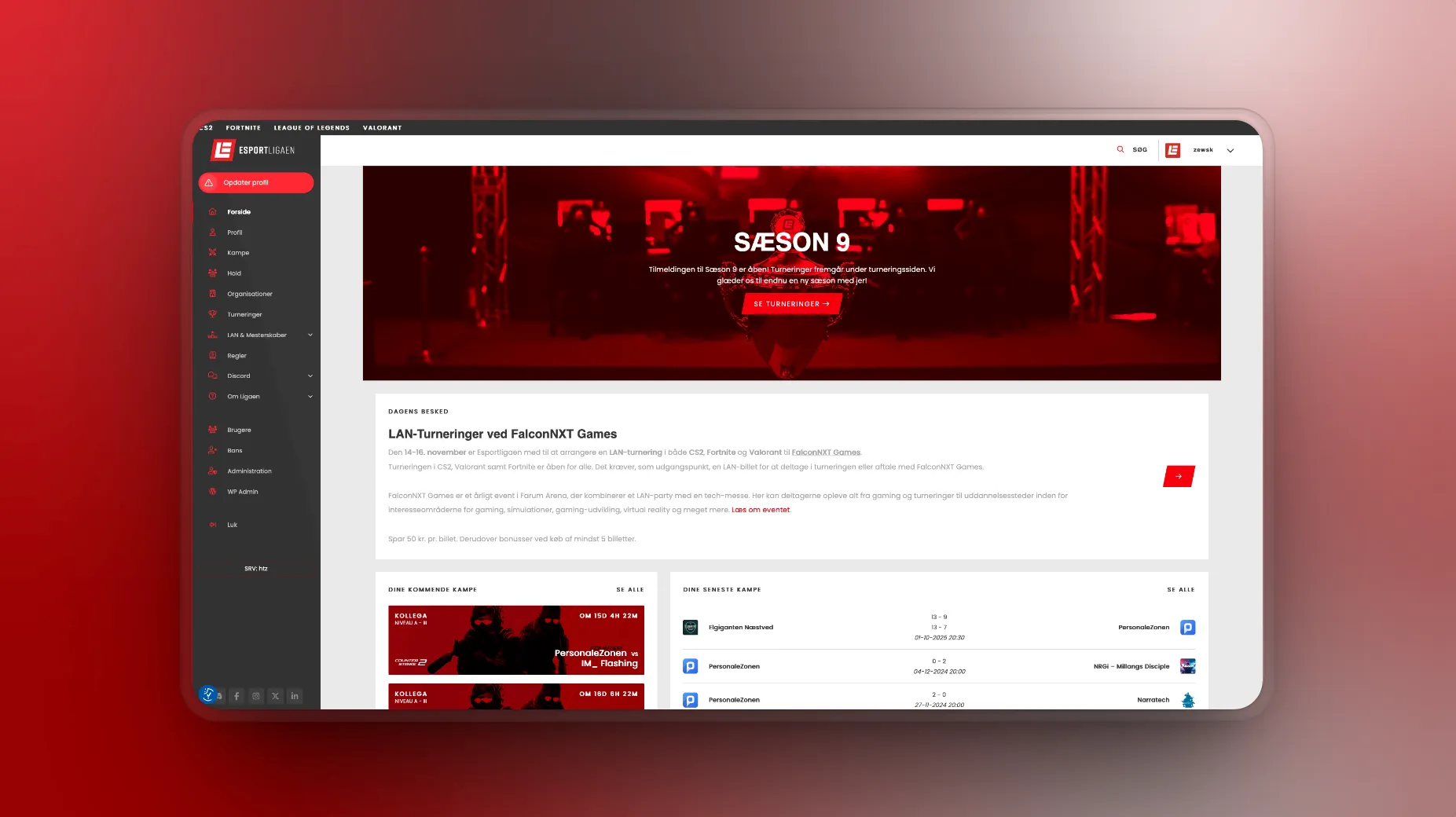
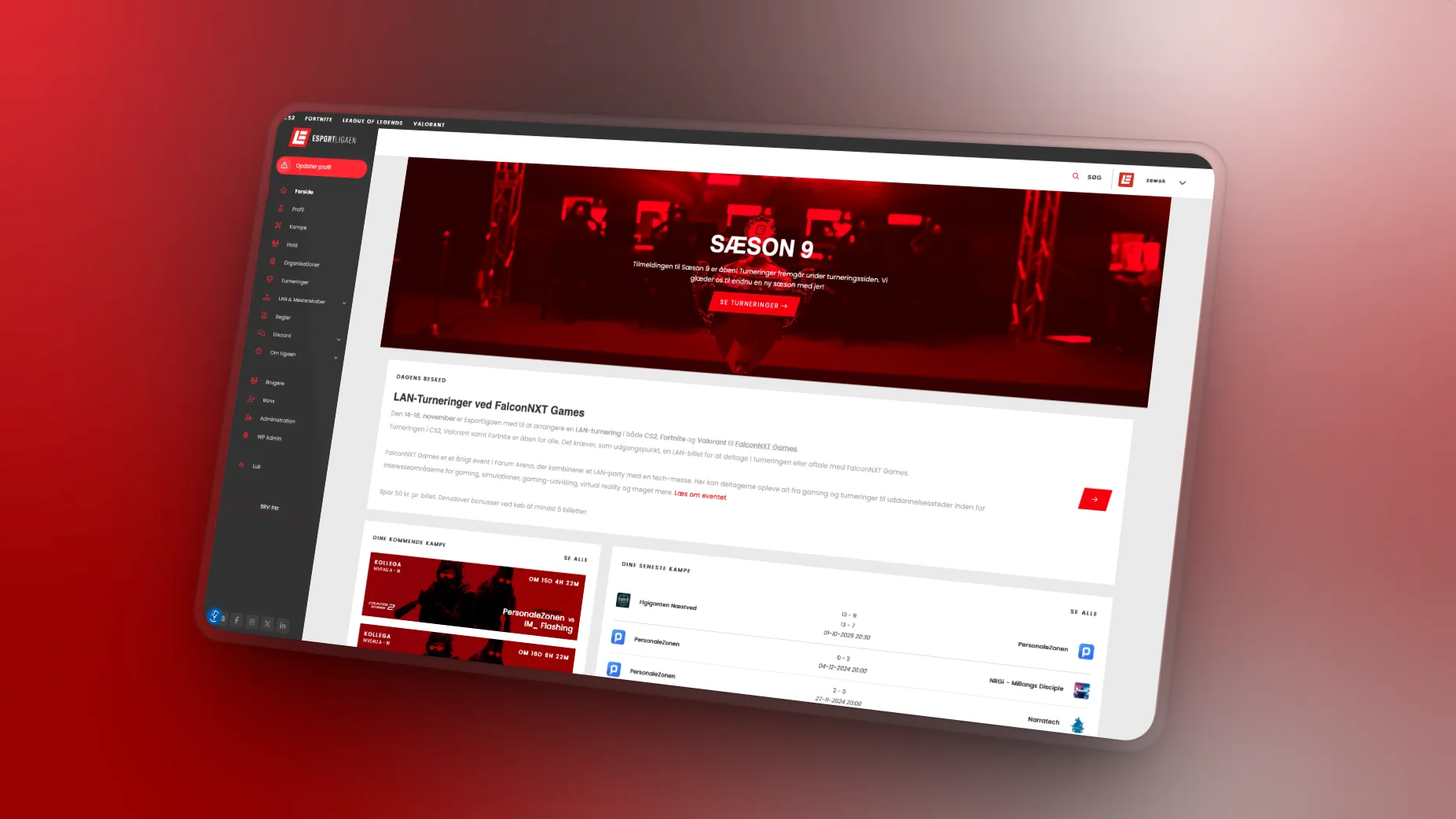
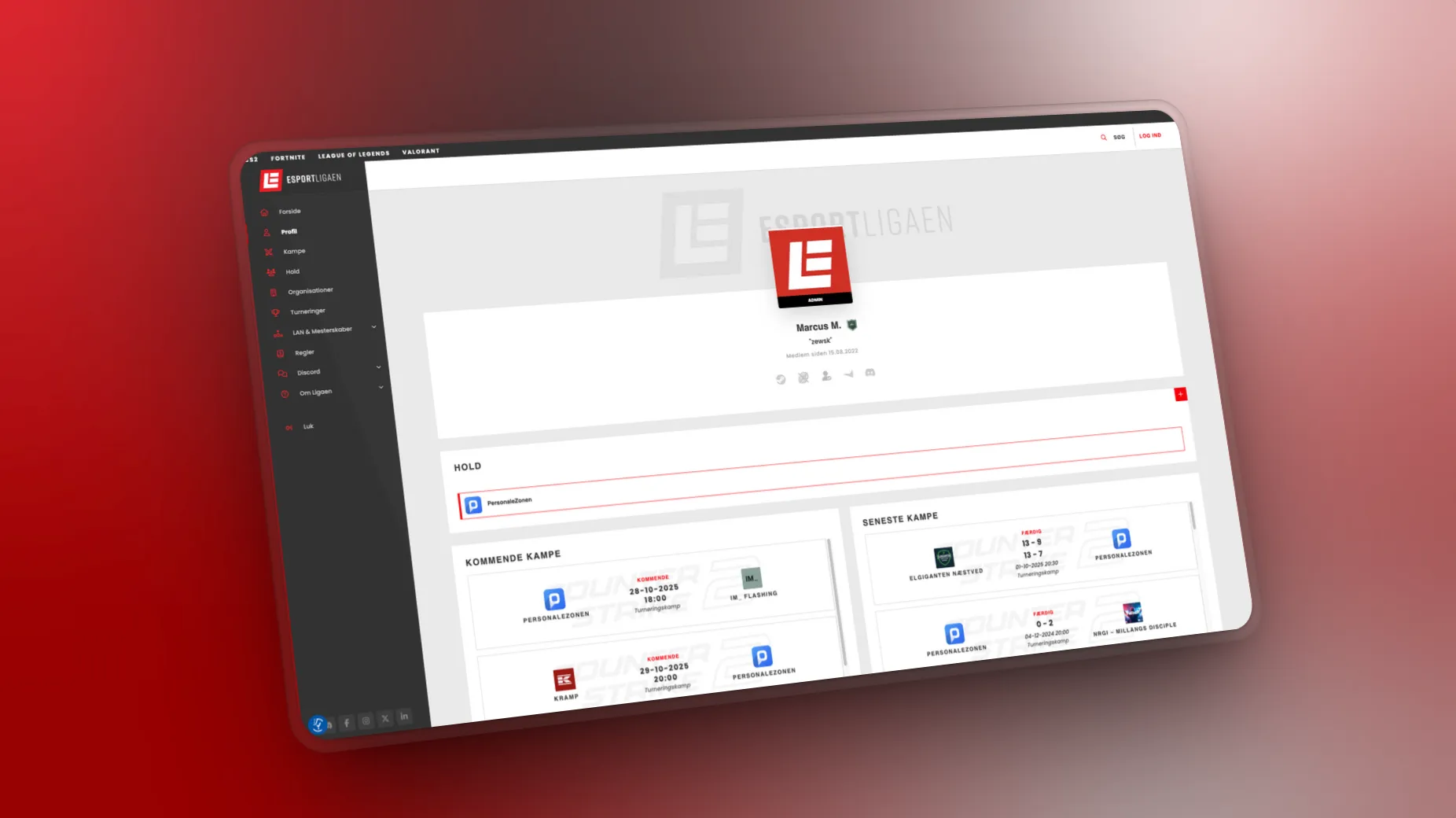
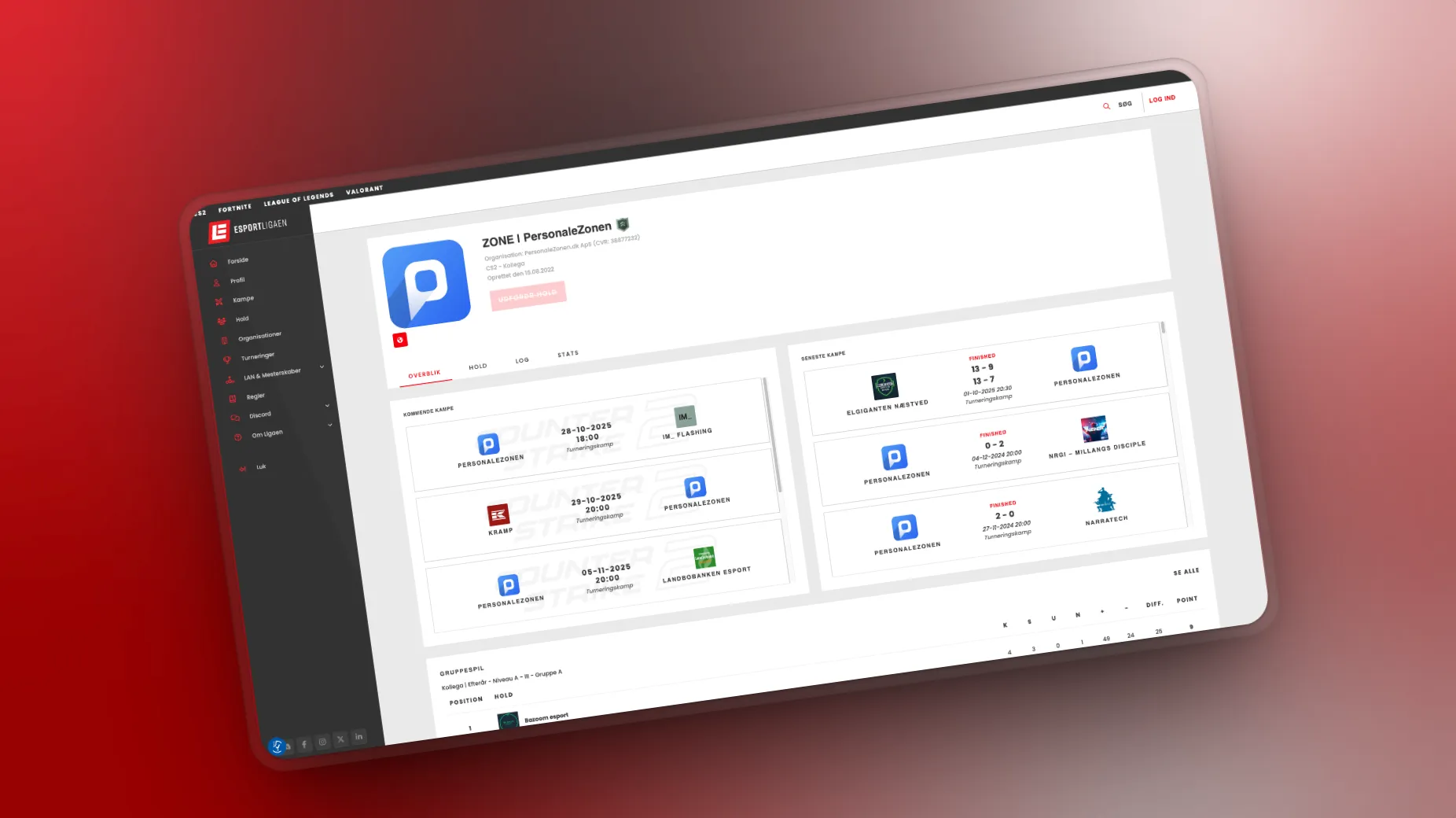
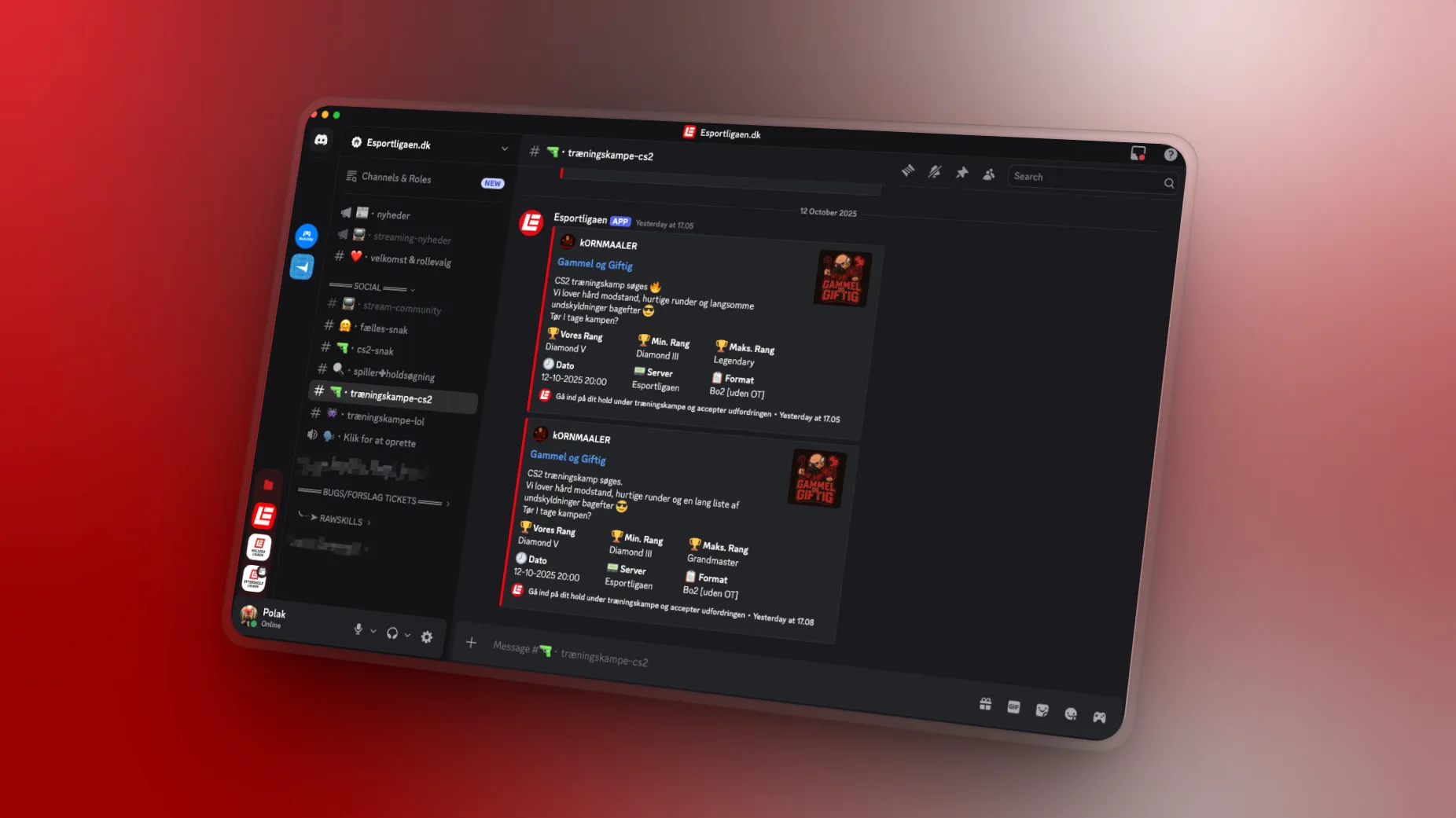
3. party integrations
Integration to Discord, Steam Bots and a 3. party server provider.
The solution
The ultimate solution was a testament to agile development and delivering a functional Minimum Viable Product (MVP) under significant constraints. We successfully launched a stable tournament platform on time and within budget. By architecting the core match and stats engines, I proved that robust, scalable systems can be built even on a non-ideal stack through clean code and smart API integration. This project was a masterclass in problem-solving, cross-functional collaboration, and client-facing development, proving that the ultimate goal is delivering tangible value and a solid foundation for future growth.