The case
Every great product solves a real problem, and Robotler is a prime example. During the Ree Park Safari project, we integrated the Spectra Systems booking platform for their sleepover cabins. While it worked, we repeatedly ran into limitations—features it couldn't handle, customizations that weren't possible, and workflows that weren't quite right for a unique business model.
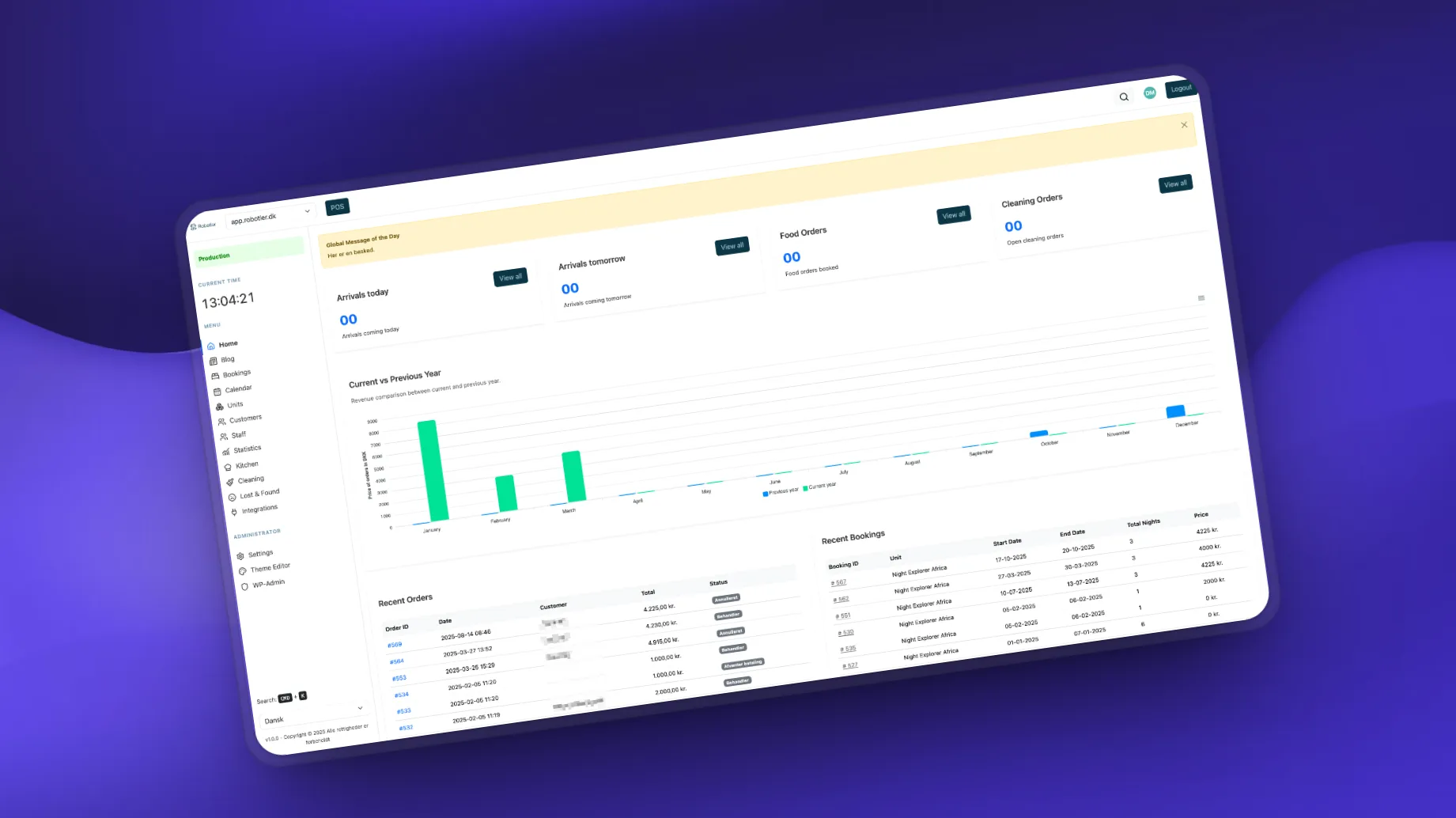
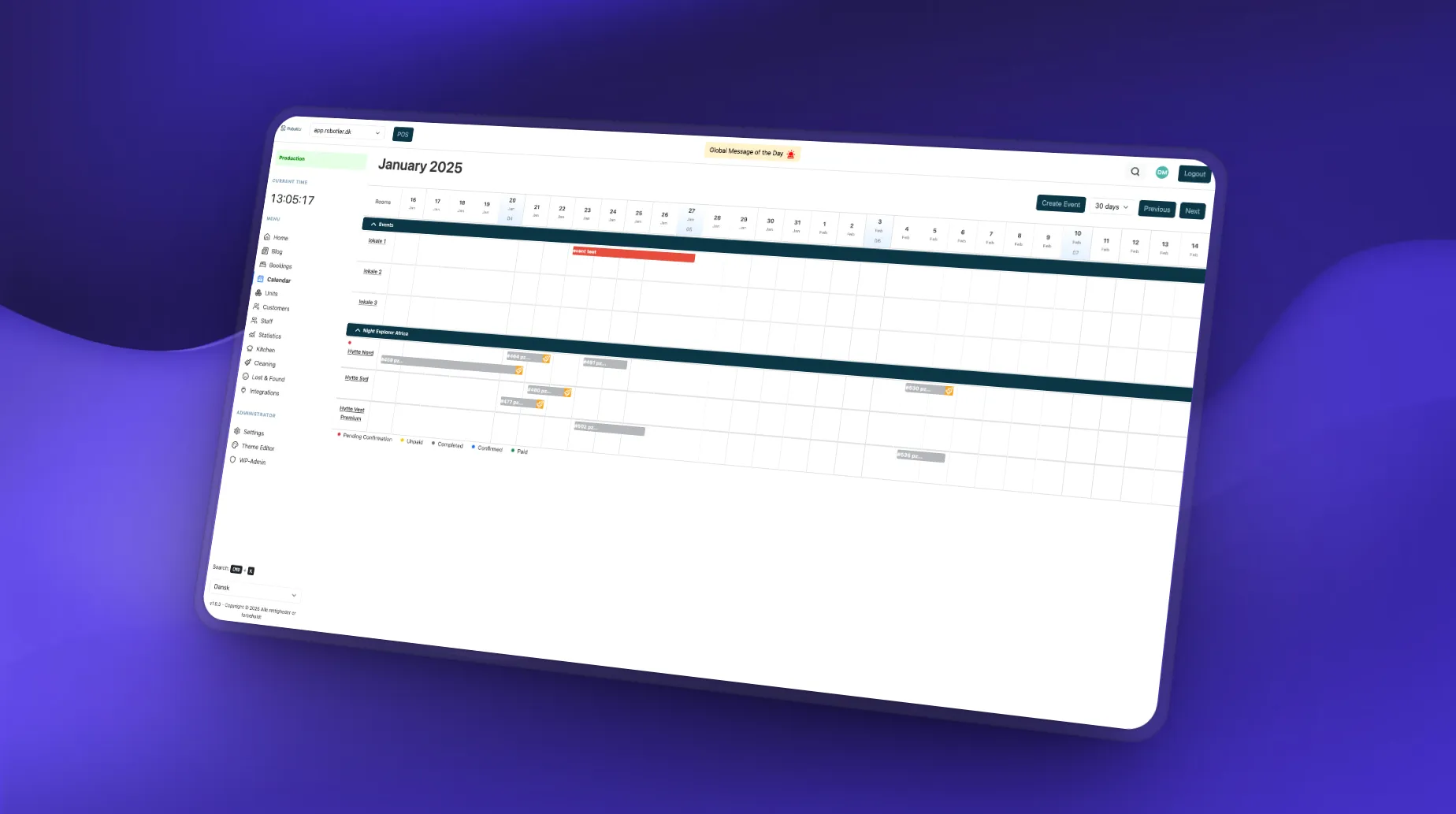
Frustrated by these constraints, the leadership at my former company posed a bold challenge: "Instead of adapting to someone else's system, let's build our own." This was the birth of Robotler, an ambitious in-house initiative to develop a proprietary, white-label SaaS booking and management platform. The goal was clear: create a flexible, powerful, and scalable reservation system that could effortlessly handle the complex demands of modern experience-based businesses, starting with our own clients.
Frustrated by these constraints, the leadership at my former company posed a bold challenge: "Instead of adapting to someone else's system, let's build our own." This was the birth of Robotler, an ambitious in-house initiative to develop a proprietary, white-label SaaS booking and management platform. The goal was clear: create a flexible, powerful, and scalable reservation system that could effortlessly handle the complex demands of modern experience-based businesses, starting with our own clients.
Old is not always the best
You might think older is better - and as a car guy, I often agree. But in software, legacy systems can create real limitations. From our team's experience, Spectra Systems is a robust product for standard operations, but it struggles with deep API integration and custom feature development. It works wonderfully "as is," but the moment you need to tailor it to a unique business model, you hit a wall.
I have to be transparent: my knowledge of Spectra is second-hand, gleaned from supporting the lead developer on the Ree Park project. While I saw it wasn't a bad system, it simply wasn't the right fit for the advanced, flexible reservation management we needed to deliver.
Furthermore, its requirement of a virtual machine to run its desktop application felt outdated and "unwelcome" in a modern cloud-based workflow. This friction for end-users was the final confirmation that the market needed a more agile, accessible, and developer-friendly solution. This gap in the market was the precise problem Robotler was built to solve.
I have to be transparent: my knowledge of Spectra is second-hand, gleaned from supporting the lead developer on the Ree Park project. While I saw it wasn't a bad system, it simply wasn't the right fit for the advanced, flexible reservation management we needed to deliver.
Furthermore, its requirement of a virtual machine to run its desktop application felt outdated and "unwelcome" in a modern cloud-based workflow. This friction for end-users was the final confirmation that the market needed a more agile, accessible, and developer-friendly solution. This gap in the market was the precise problem Robotler was built to solve.
Building something better
Our vision for Robotler was clear: to build something fundamentally better. We aimed to create an intuitive, powerful SaaS booking platform that anyone could use with ease, directly addressing the frustrations we had encountered with existing solutions.
We were under no illusions about the challenge. As a team of just two developers, we were competing against established companies with far greater resources. We knew it would be a marathon, not a sprint, to reach feature parity and beyond. But that didn't scare us. Our passion and innovative ideas fueled our progress, and we were rapidly closing in on a functional MVP (Minimum Viable Product).
The most exciting innovation was our planned integration with smart door lock systems. We were in active talks with hardware manufacturers to create a seamless experience where Robotler would generate a unique, temporary password for a specific cabin, valid only for the guest's booking dates. This "keyless entry" feature would have been a game-changer for the industry.
Unfortunately, the project was discontinued before we could bring this vision to life. While it was disappointing to have the plug pulled on such a promising venture, the experience was invaluable. It taught me how to architect a complex SaaS product from the ground up and gave me a profound belief in its potential. The lessons learned from Robotler are deeply ingrained, and I hope to one day channel this experience into building a similar—or even better—platform in the future.
We were under no illusions about the challenge. As a team of just two developers, we were competing against established companies with far greater resources. We knew it would be a marathon, not a sprint, to reach feature parity and beyond. But that didn't scare us. Our passion and innovative ideas fueled our progress, and we were rapidly closing in on a functional MVP (Minimum Viable Product).
The most exciting innovation was our planned integration with smart door lock systems. We were in active talks with hardware manufacturers to create a seamless experience where Robotler would generate a unique, temporary password for a specific cabin, valid only for the guest's booking dates. This "keyless entry" feature would have been a game-changer for the industry.
Unfortunately, the project was discontinued before we could bring this vision to life. While it was disappointing to have the plug pulled on such a promising venture, the experience was invaluable. It taught me how to architect a complex SaaS product from the ground up and gave me a profound belief in its potential. The lessons learned from Robotler are deeply ingrained, and I hope to one day channel this experience into building a similar—or even better—platform in the future.
My Part
Robotler was my project to lead. I stood at the frontline of development, tasked with driving the vision from concept to a live product. I managed a small, agile team of two other developers—one intern and a new hire unfamiliar with WordPress—guiding them through the technical architecture and development process.
Despite the resource constraints, our progress was significant. My key technical contributions included:
- Core Platform Features: I architected and built essential functionalities like phone-based booking systems and the ability for customers to add food orders to existing reservations.
- WordPress Ecosystem Integration: I developed a custom White-Label WordPress Plugin. This allowed clients to seamlessly connect their existing websites to the Robotler backend, offering immense flexibility beyond building them a new site from scratch.
- Third-Party API Development: We began laying the groundwork for critical business integrations with platforms like BillWerk (now Frisbii) and Billy for automated invoicing and payment processing.
In essence, I was instrumental in taking Robotler from 0 to a near-complete Version 1. We built a robust, flexible foundation with a clear path to market. While the project was ultimately discontinued before its official launch, the experience was a masterclass in SaaS product leadership, full-stack development, and building a scalable platform under a tight timeline. It's a testament to what a small, focused team can achieve, and the lessons learned are directly applicable to any future ambitious software venture.
Despite the resource constraints, our progress was significant. My key technical contributions included:
- Core Platform Features: I architected and built essential functionalities like phone-based booking systems and the ability for customers to add food orders to existing reservations.
- WordPress Ecosystem Integration: I developed a custom White-Label WordPress Plugin. This allowed clients to seamlessly connect their existing websites to the Robotler backend, offering immense flexibility beyond building them a new site from scratch.
- Third-Party API Development: We began laying the groundwork for critical business integrations with platforms like BillWerk (now Frisbii) and Billy for automated invoicing and payment processing.
In essence, I was instrumental in taking Robotler from 0 to a near-complete Version 1. We built a robust, flexible foundation with a clear path to market. While the project was ultimately discontinued before its official launch, the experience was a masterclass in SaaS product leadership, full-stack development, and building a scalable platform under a tight timeline. It's a testament to what a small, focused team can achieve, and the lessons learned are directly applicable to any future ambitious software venture.
The Result
The result is a story of "what could have been." We successfully built a robust and functional MVP (Minimum Viable Product) on WordPress that demonstrated the core vision. The platform could handle complex bookings, integrations, and featured a custom plugin architecture. Had development continued, I am confident we would have launched a competitive and powerful Version 1.0 to the public.
However, the project faced significant headwinds. We were navigating the inherent limitations of WordPress for a complex SaaS product, compounded by a tight deadline and a constrained budget. Ultimately, the decision was made at the leadership level to discontinue the project before its scheduled completion.
While the plug was pulled, the legacy of Robotler is not one of failure, but of proven potential. The technical foundation we built was solid. Whether the project is paused or will be revived in the future remains to be seen, but the experience provided invaluable lessons in SaaS product development, technical leadership, and navigating the real-world business constraints that shape even the most promising ideas.
However, the project faced significant headwinds. We were navigating the inherent limitations of WordPress for a complex SaaS product, compounded by a tight deadline and a constrained budget. Ultimately, the decision was made at the leadership level to discontinue the project before its scheduled completion.
While the plug was pulled, the legacy of Robotler is not one of failure, but of proven potential. The technical foundation we built was solid. Whether the project is paused or will be revived in the future remains to be seen, but the experience provided invaluable lessons in SaaS product development, technical leadership, and navigating the real-world business constraints that shape even the most promising ideas.